Levi’s 501 jeans are the most famous in the world. They are also among the most counterfeited. We explain how to easily recognize a fake Levi’s 501 jeans.
The leather patch label
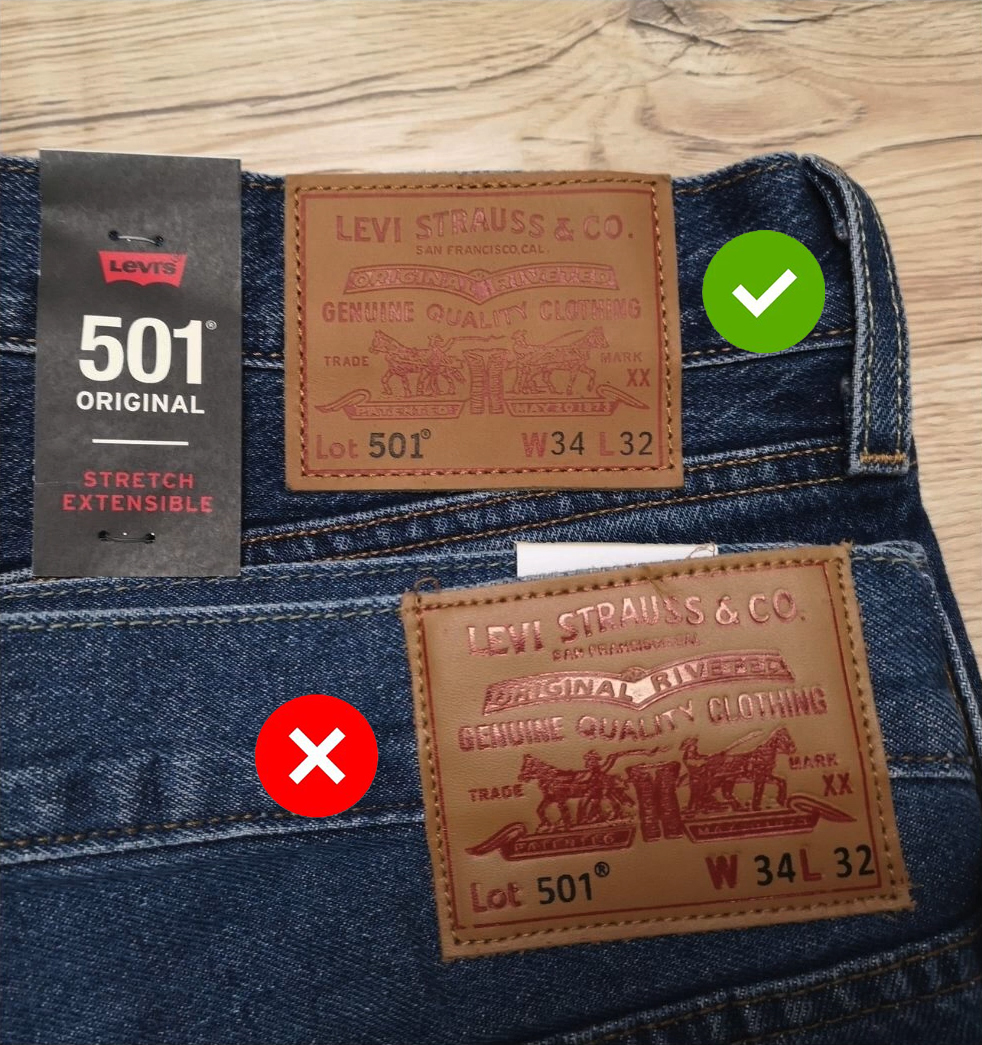
All Levi’s jeans have this famous square leather patch on the back of the jeans. The patch must be made of good quality leather. The jean model(here 501)and the size(here 34/32)are printed in black. These black inscriptions must be aligned with the preceding text, which is not the case for the fake jeans. Finally, the stitching on the patch is even. On the fake jeans, you can see that the stitches extend beyond the top left corner of the square.
The waist button
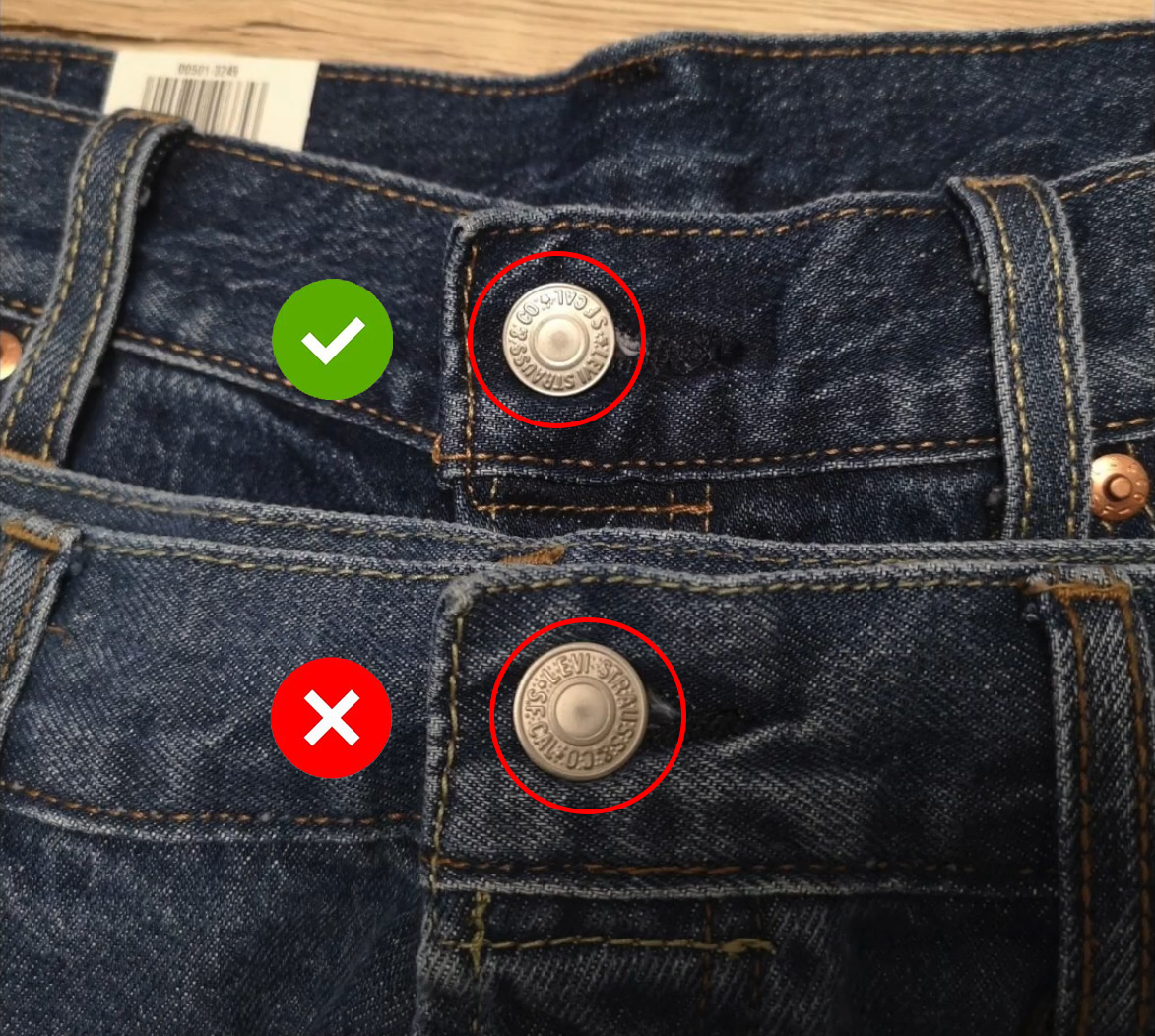
The waist button must be made of copper or silver metal and engraved with the words “LEVI STRAUSS”. This must be very clear and readable. On counterfeit jeans, the button is larger than on the genuine one and the inscription is less legible.
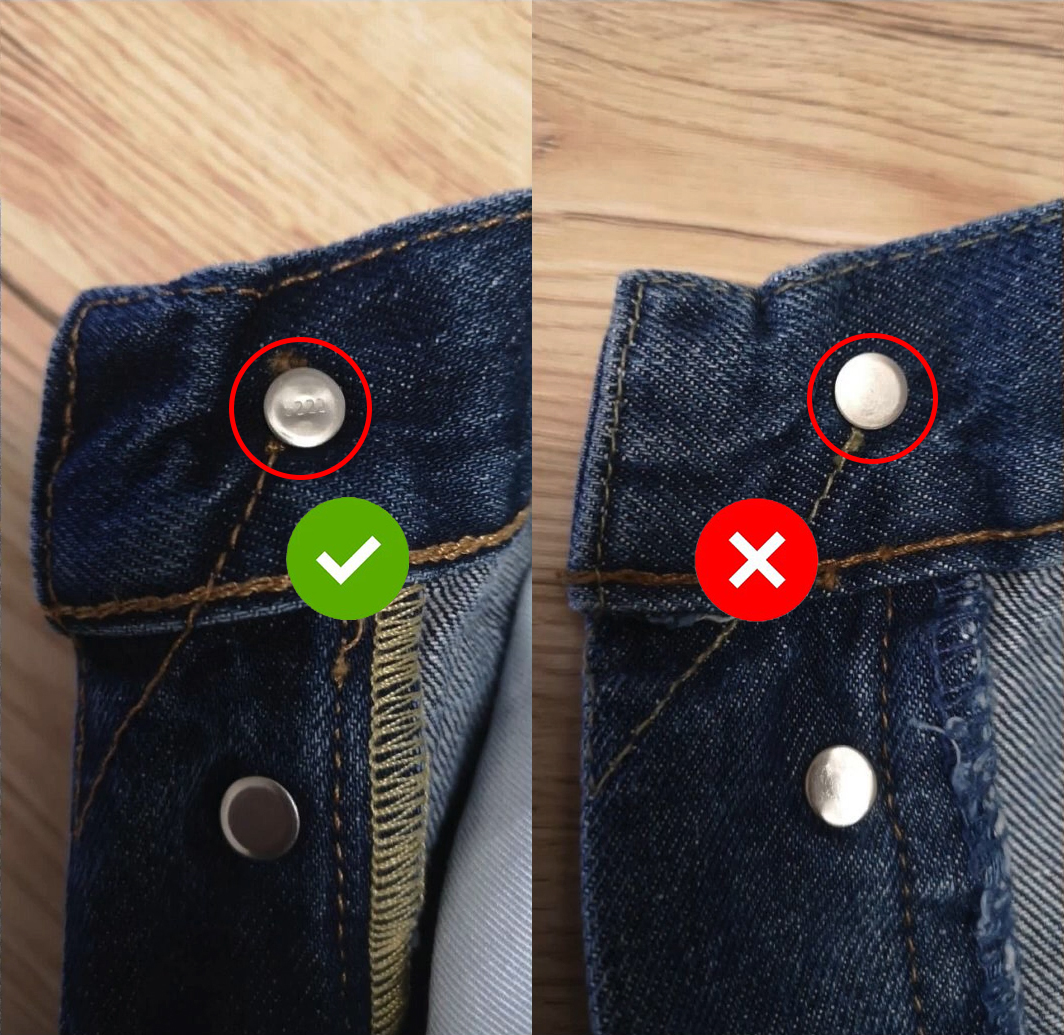
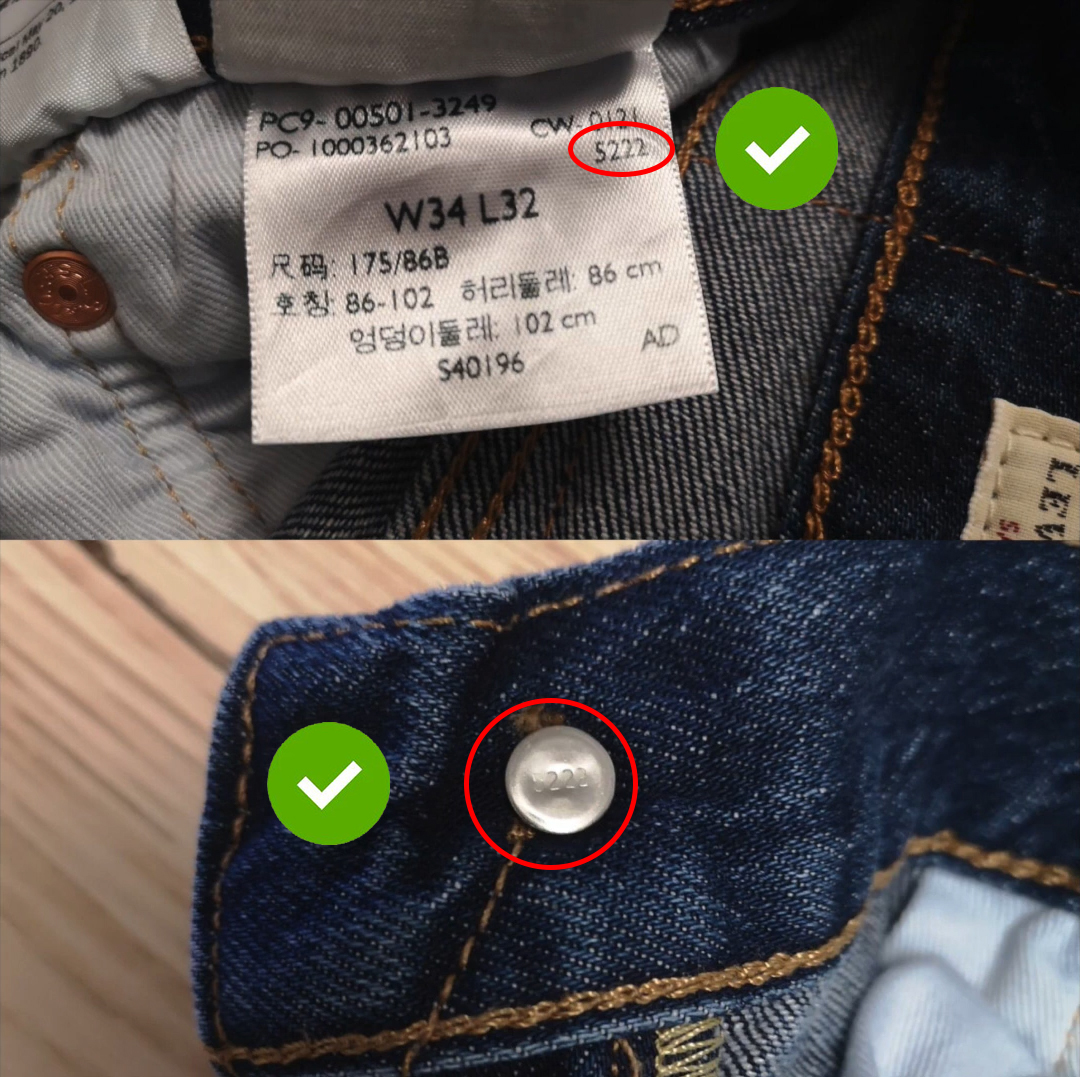
On the back of the button, there is a 4-digit number(here 5222). This number must also appear on the care label inside the jeans:
There is no number on the back of the counterfeit button.
The rivets
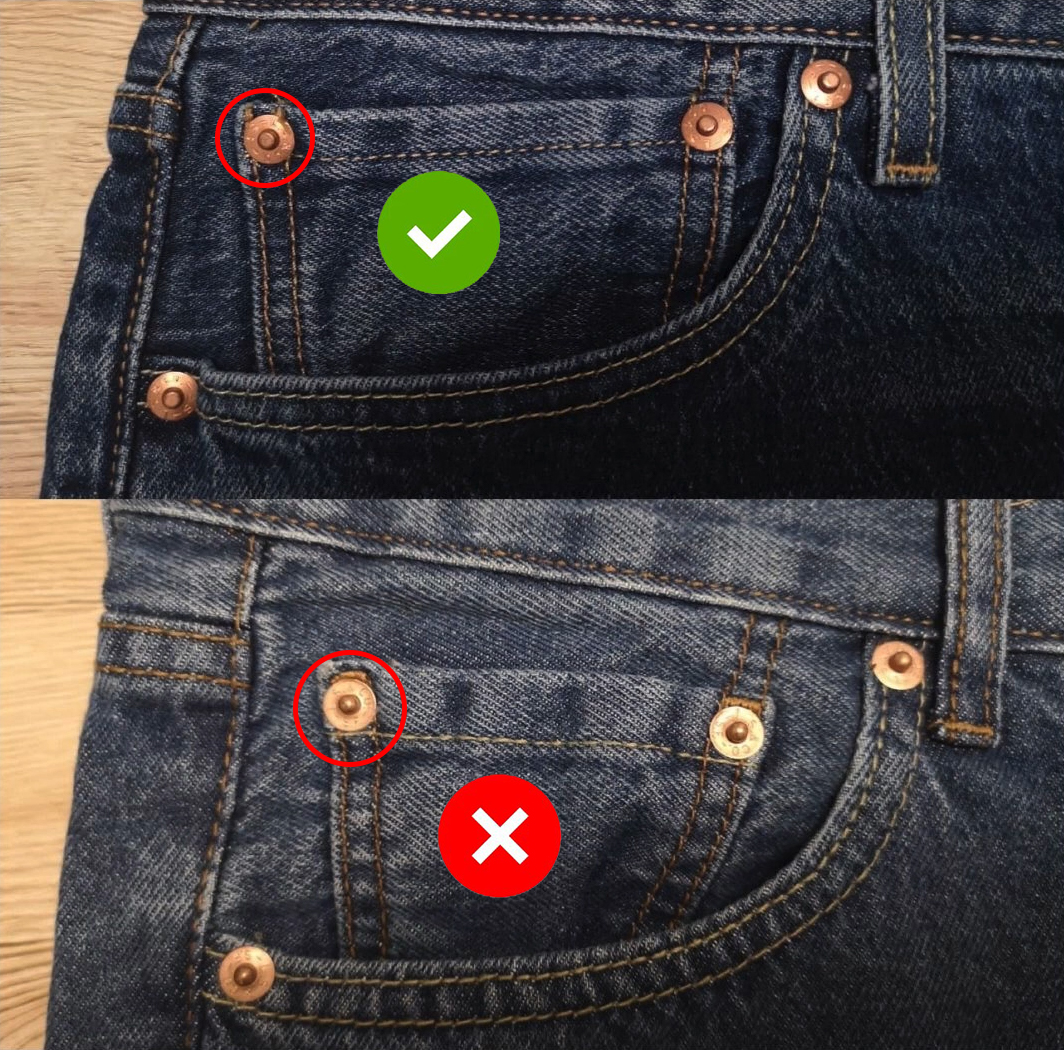
The jean’s rivets are copper and sturdy. On the counterfeit, the rivets are of poor quality and do not have the correct copper color.
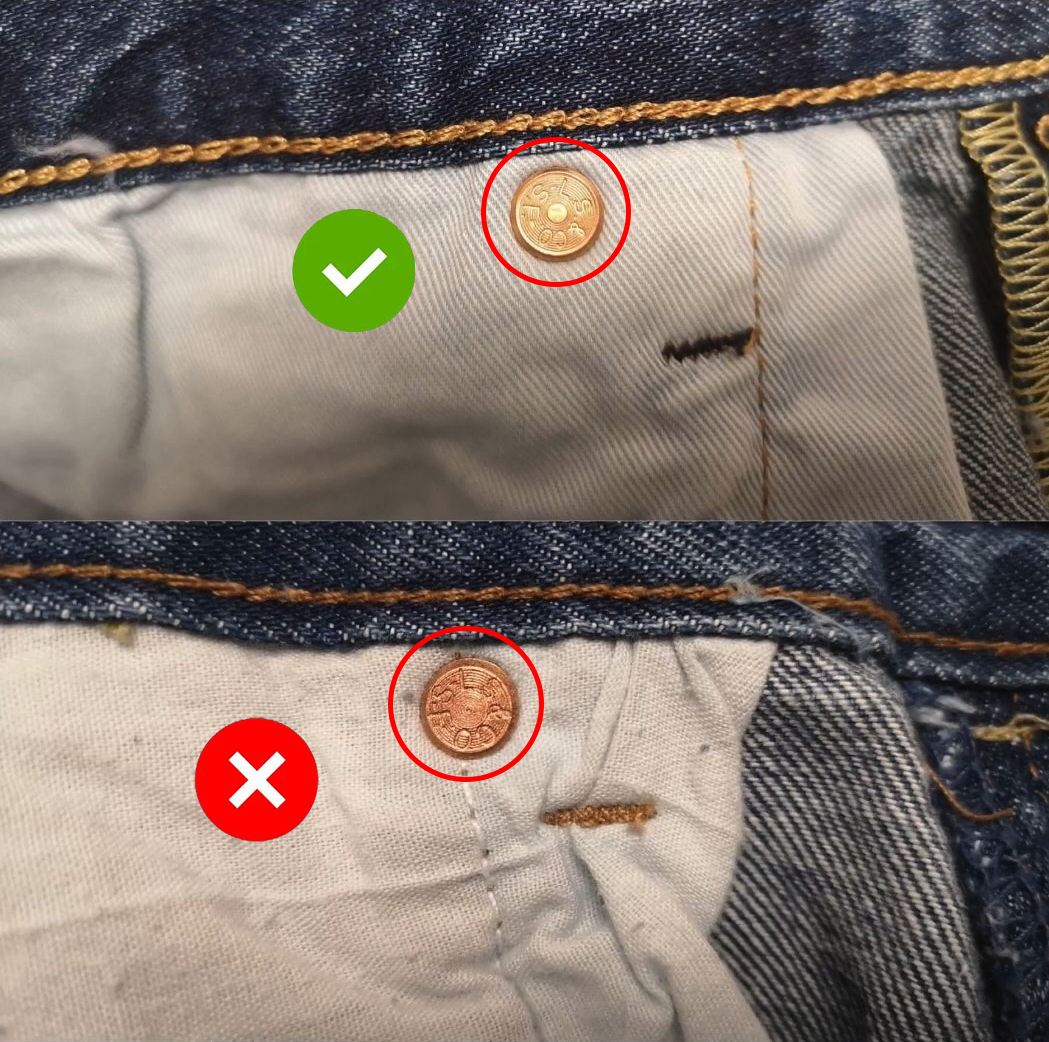
On the back of the rivets, you should see clearly engraved inscriptions. You can read(“LS”: Levi Strauss and “SF”: San Francisco). On the counterfeit, there is an engraving, but it is much less clean.
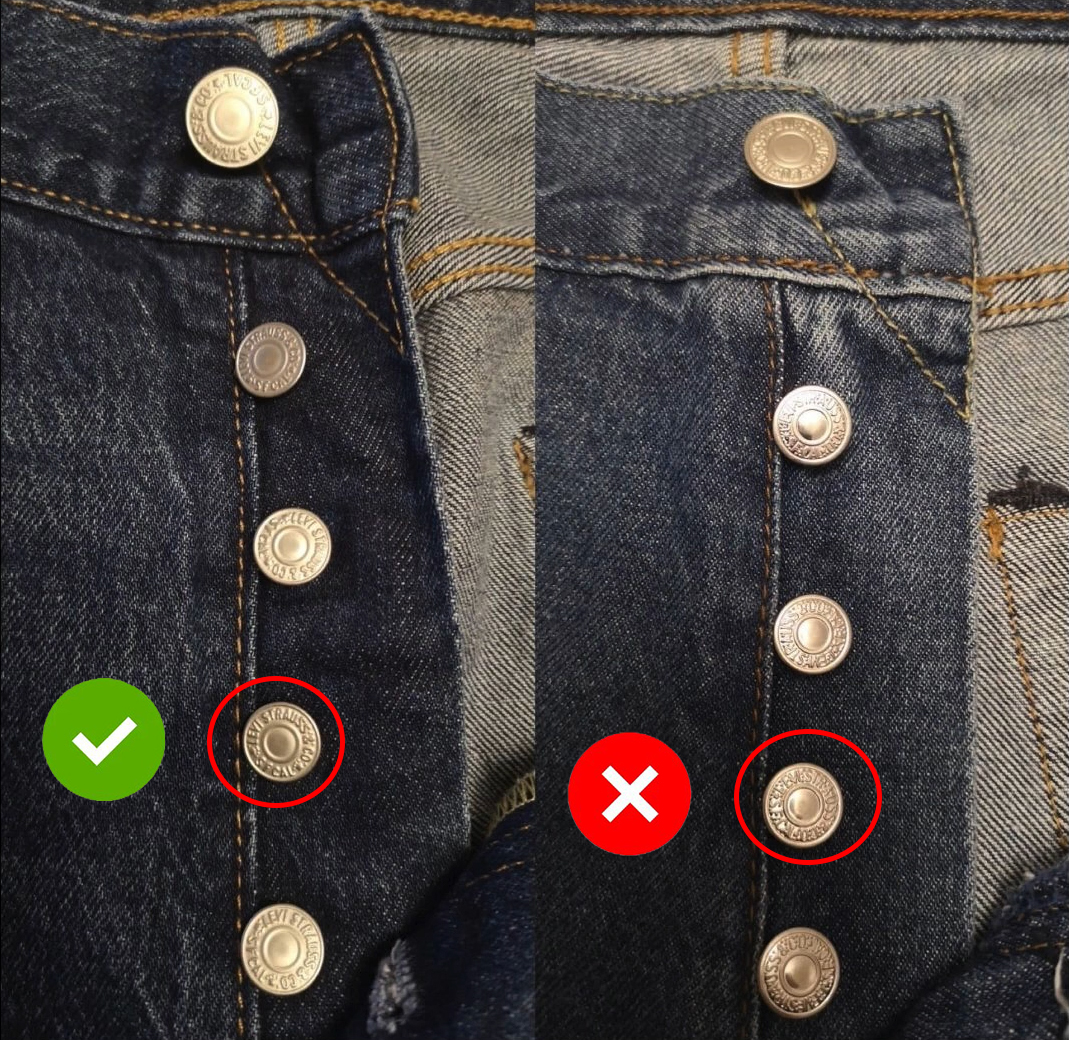
For a 501 jean with button fly, the buttons must have the same design as the waist button seen above, with the same engraving. On the counterfeit, the fly buttons are fragile, and their engraving is less embossed than the real buttons.
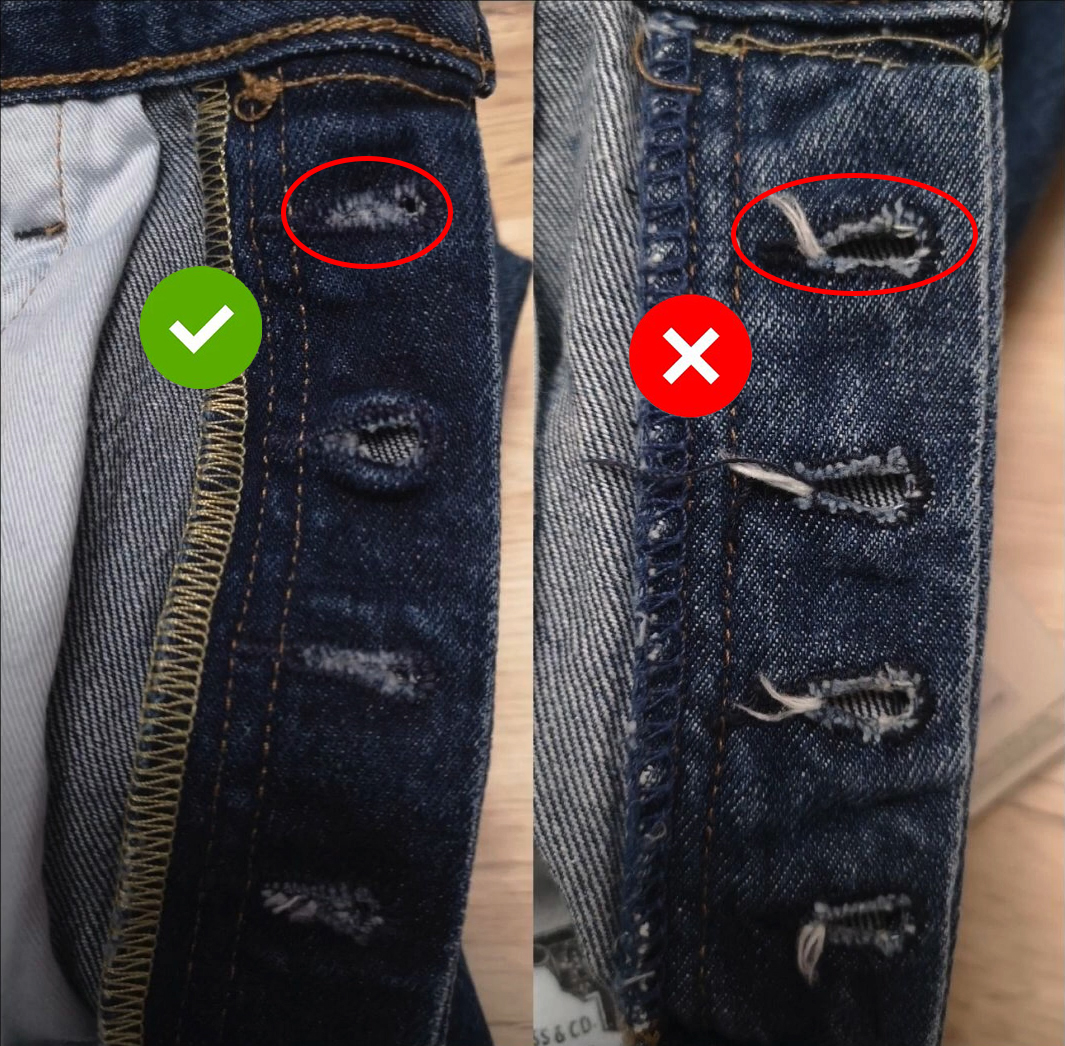
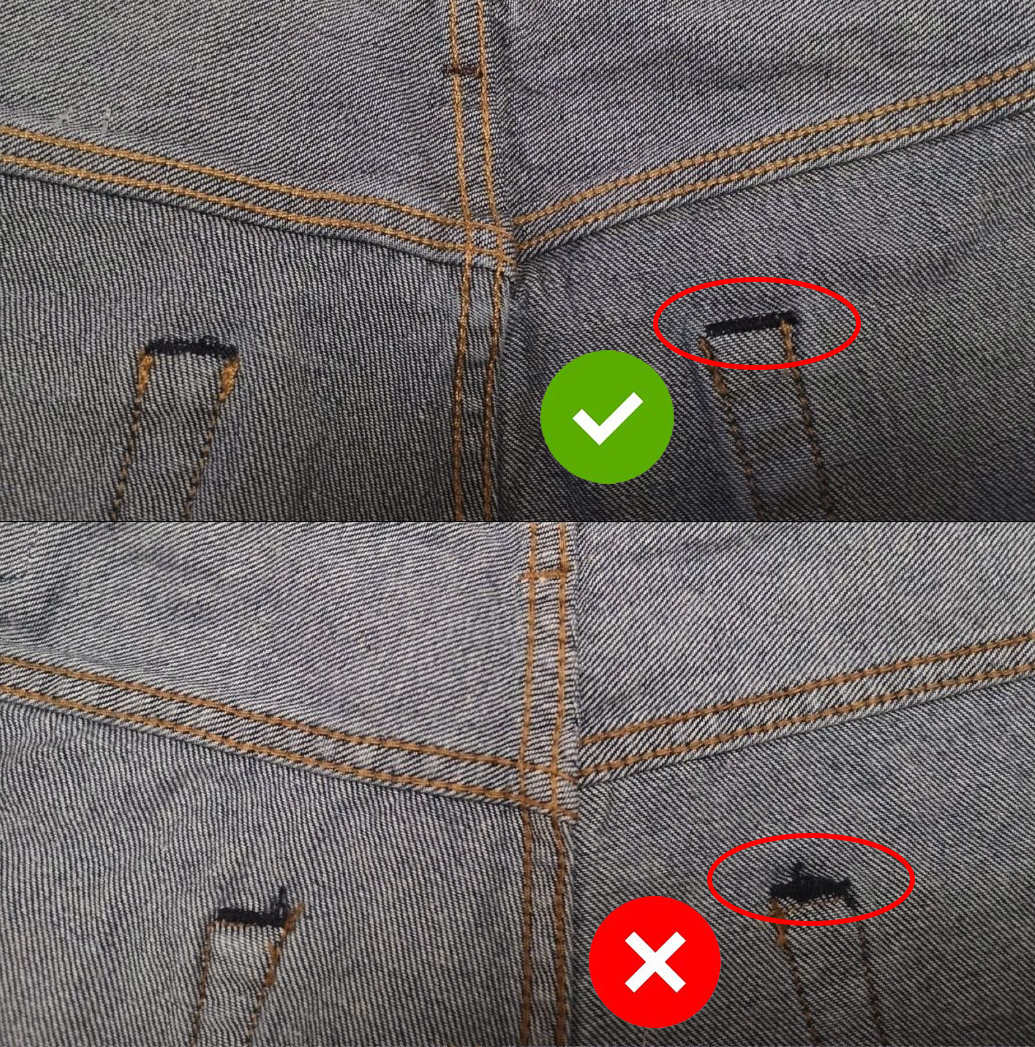
The buttonholes on the fake jean are messy, too large, and have loose threads. On the real jean, on the contrary, the holes are neat and well sewn.
The seams
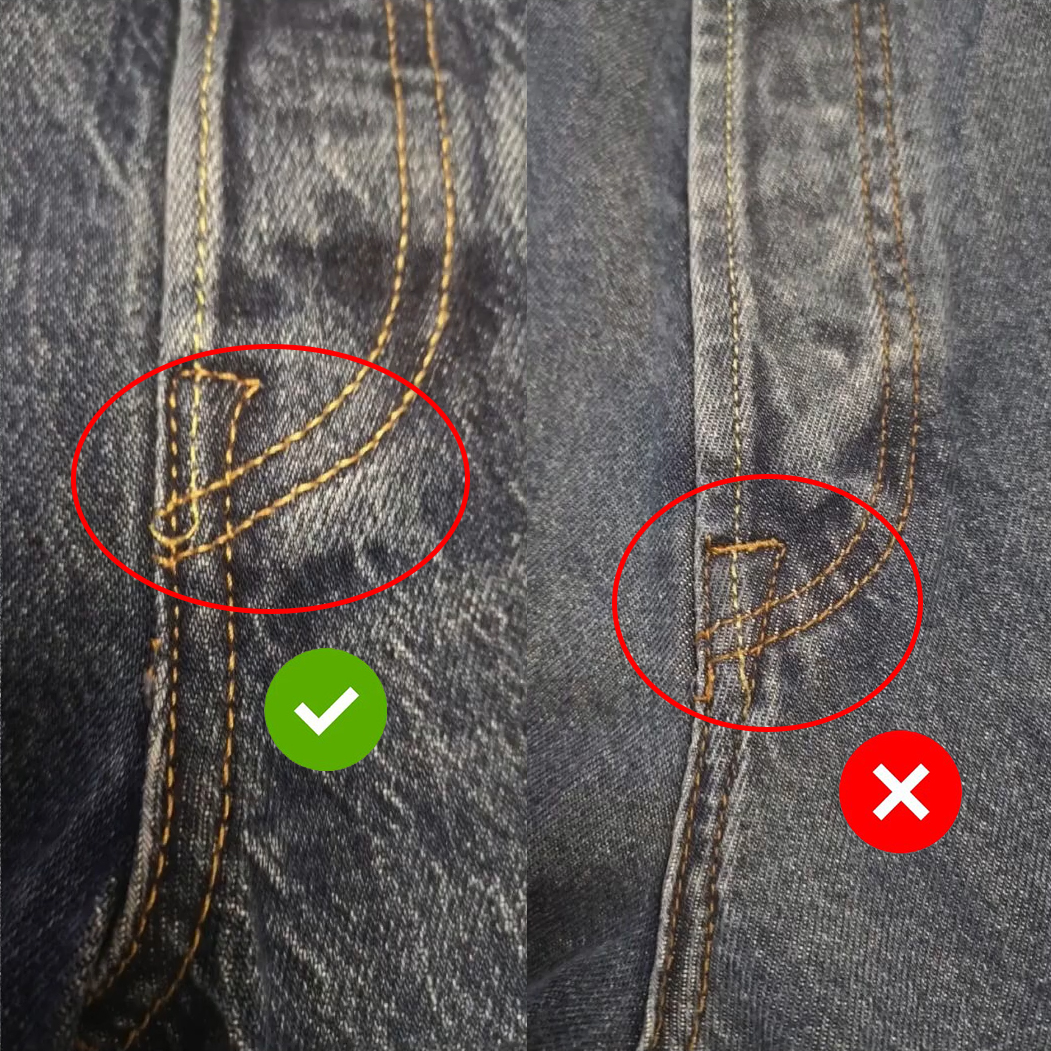
The genuine Levi’s jean uses strong seams and thick, good quality thread. The fake jean uses thinner thread.
The real jean even haschain stitch seamsin the heavily stressed sections of the jean to improve durability. The fake jean only uses simple stitches.
Overall, the real jean has no loose threads, whereas the fake jean has them all over, as can be seen in the photo above.
The outer red label
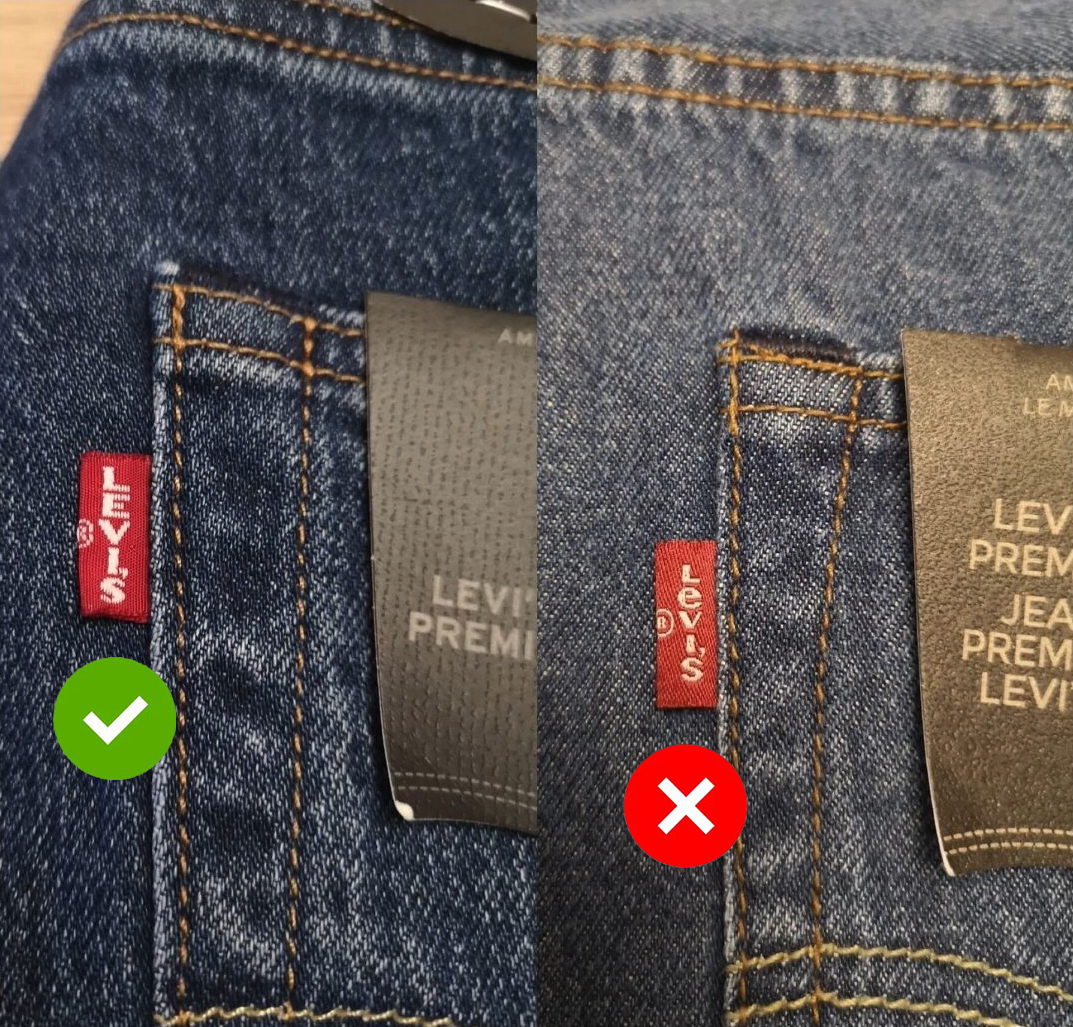
The label must be perfectly cut. Note that on most current models, the 'e' in Levi's is lowercase. The uppercase 'E' (Big E) is reserved for rare vintage editions or certain "Premium" collections.
The inner red label
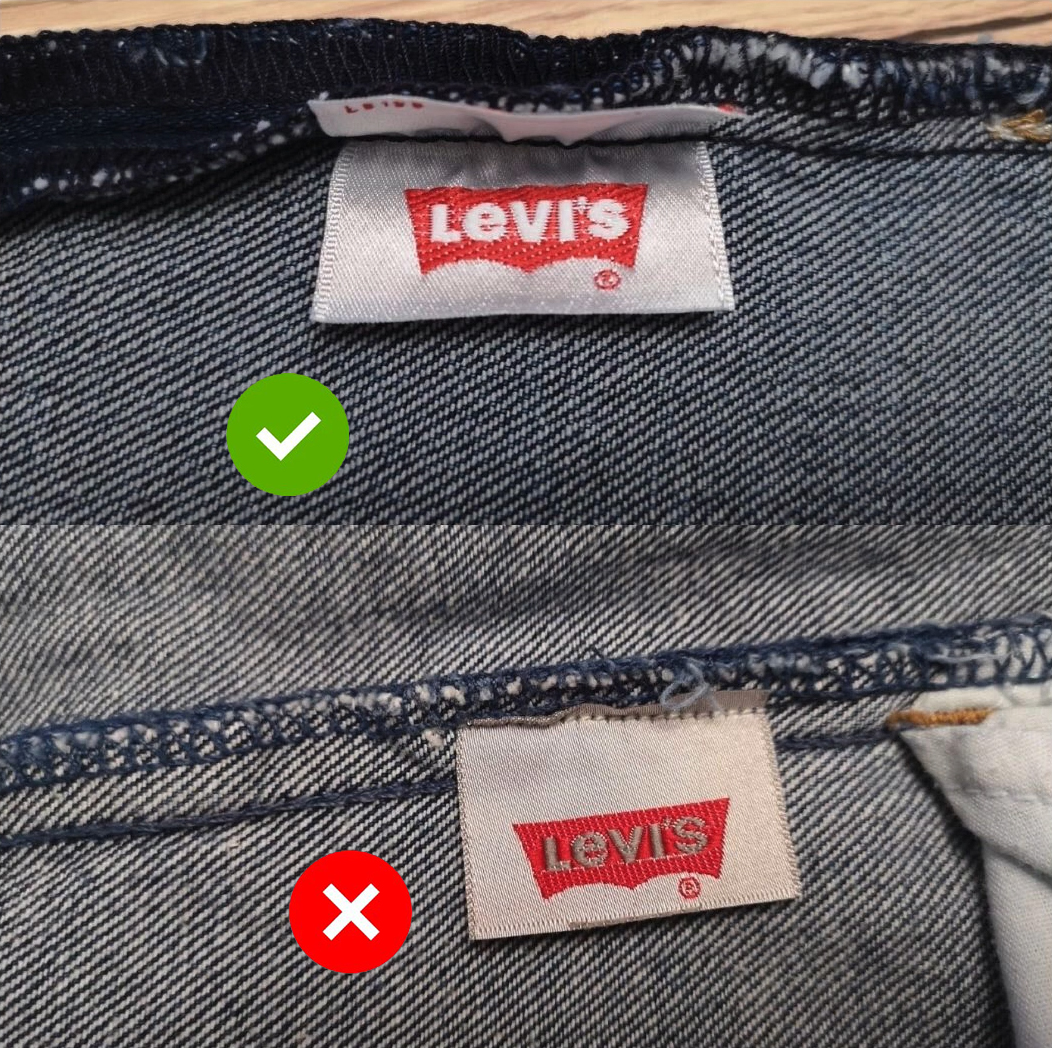
Next to the pocket, inside, there is a small label with “LEVI’S” written in red on white. The label must be well sewn and the text centered on the label. The counterfeit’s text is not centered.
The inside of the right back pocket
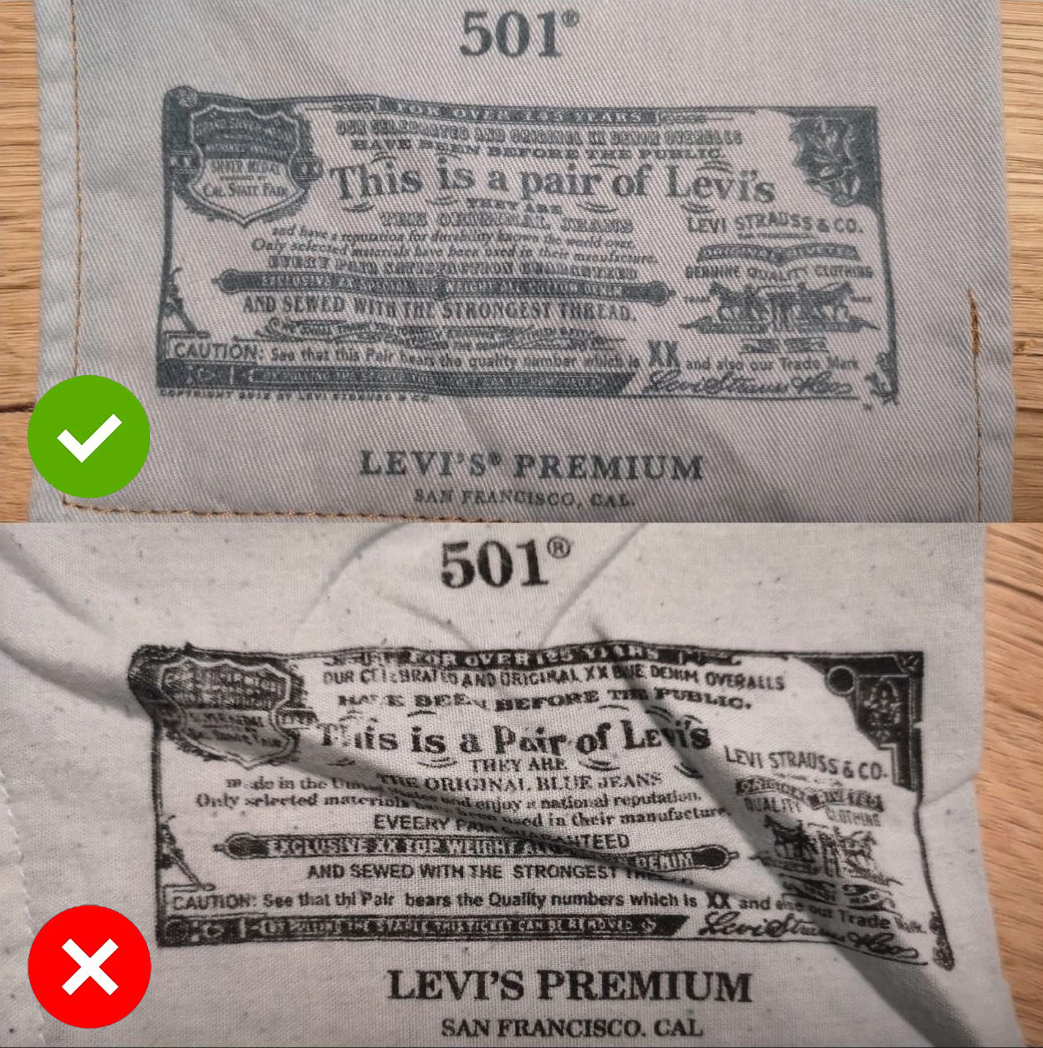
You can find the historic Levi’s print. It must be clearly readable. At the bottom of the counterfeit pocket, there is a missing “R” (for “Registered”) between “LEVI’S” and “PREMIUM.”
Finally, the thread used to sew the edges of the pocket must be the same copper color as the rest of the jean’s threads. This is not the case for the pocket thread on the counterfeit: the thread is white.
You now know how to spot a counterfeit Levi’s jean, even if the counterfeit is of very high quality, as in this article. Generally, counterfeits are crude and very easy to detect.
You can buy on Fastbuy.fr, you will be sure to always have an authentic and durable Levis jean!